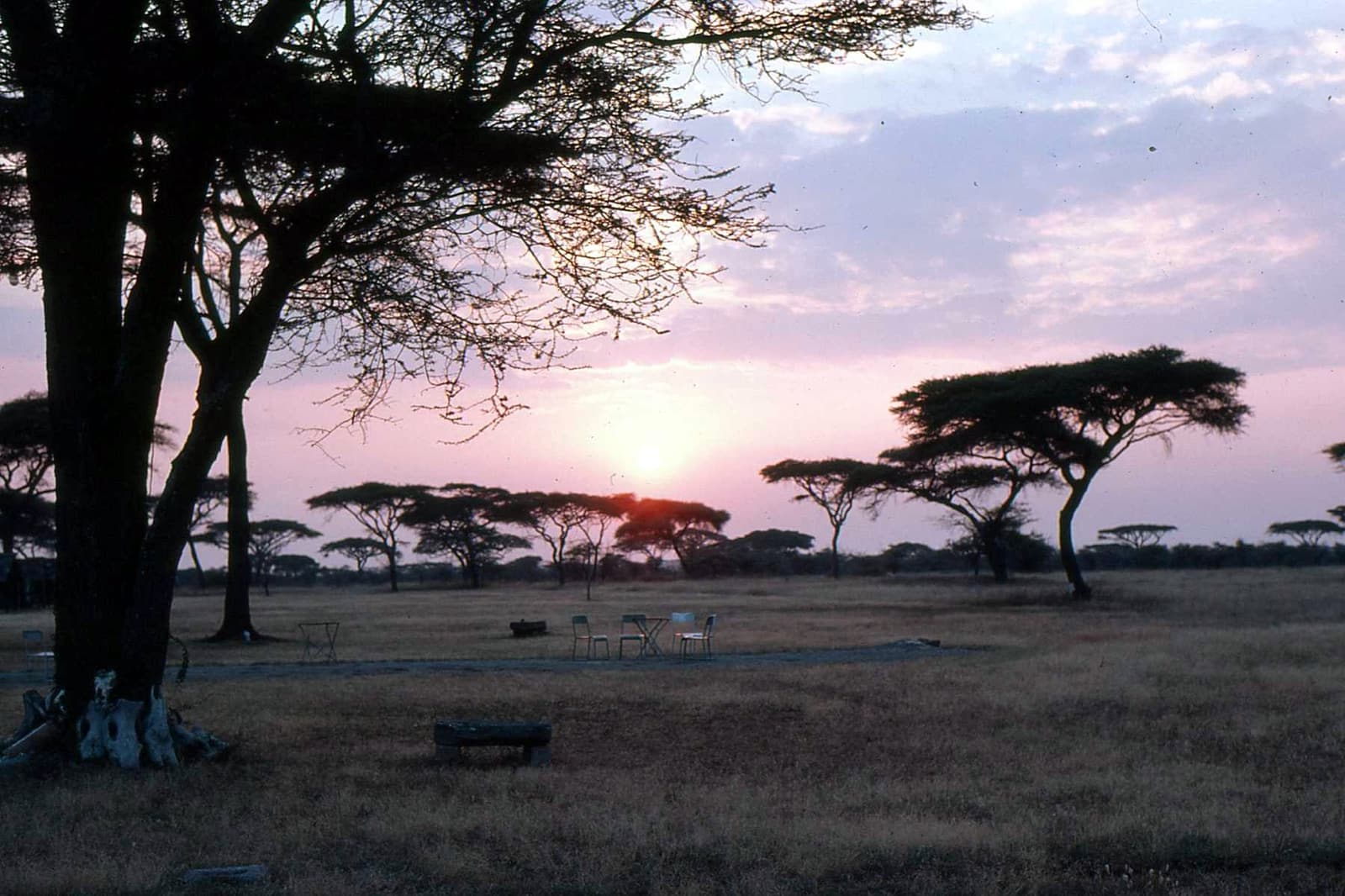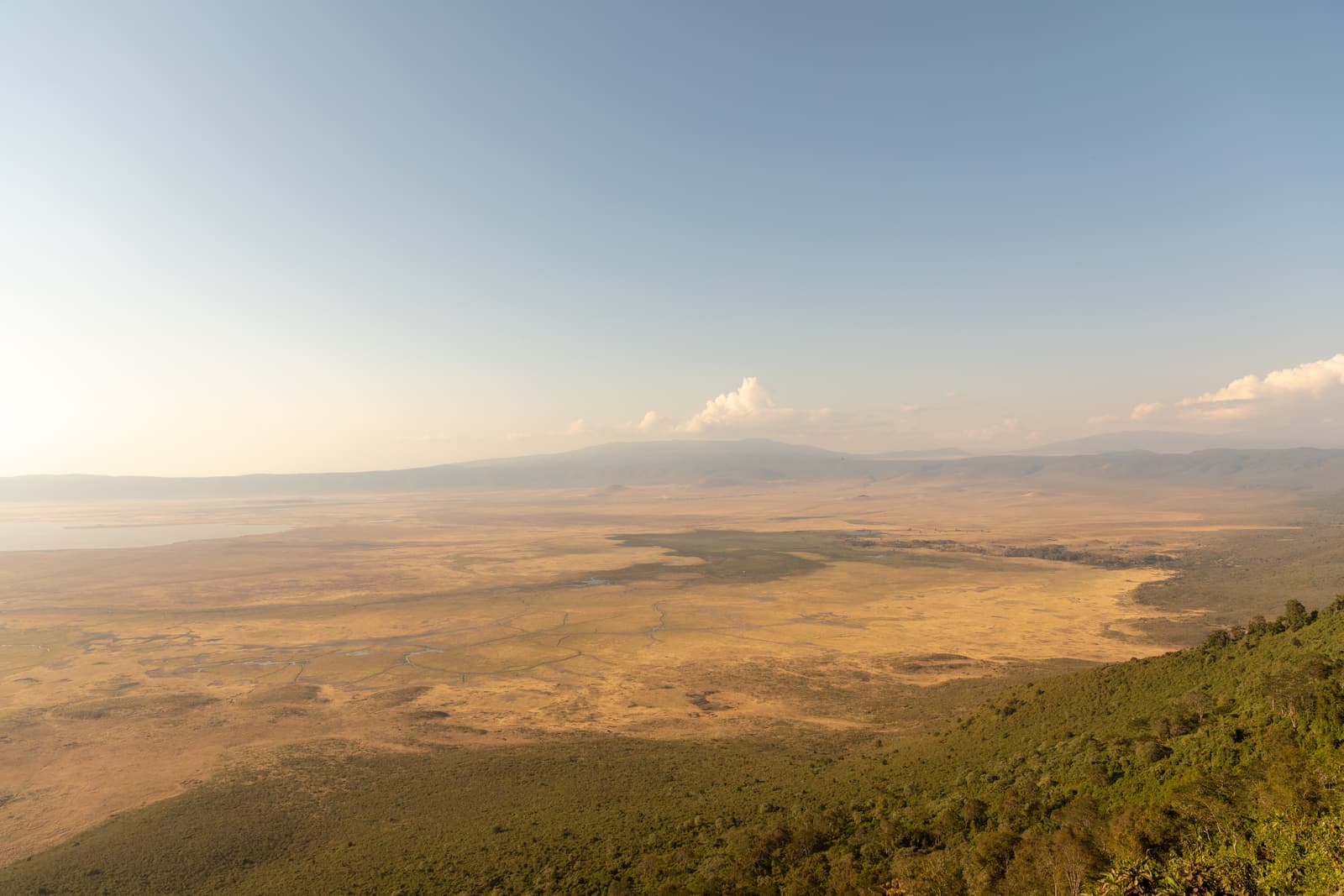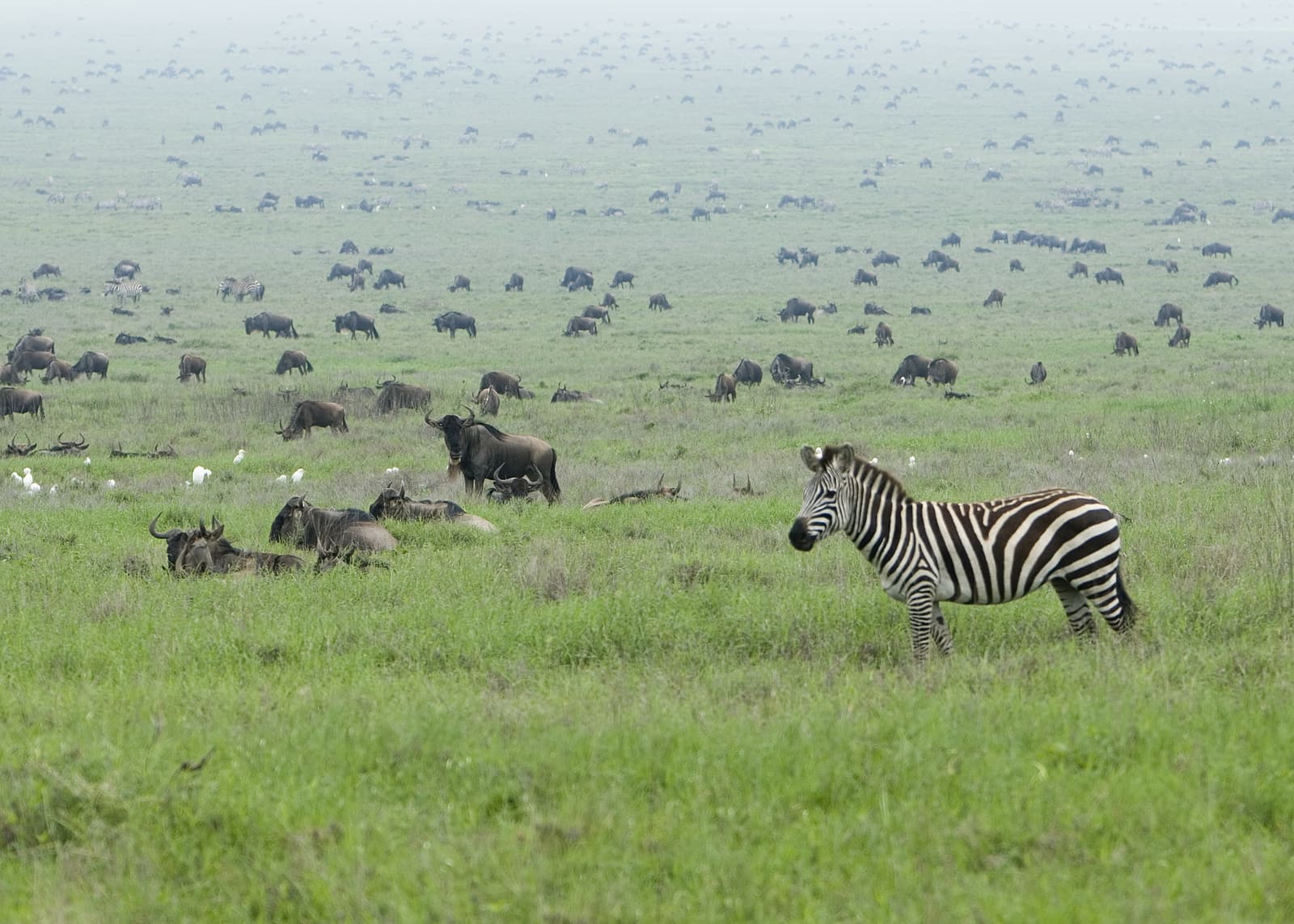
West of the Ngorongoro highlands the land falls away into the Serengeti — nearly 15,000 square kilometres of grassland, woodland and granite outcrops, a UNESCO World Heritage Site since 1981. The name comes from a Maasai word usually translated as “endless plains”.
The park and the conservation area form a single ecosystem. Well over a million wildebeest, with hundreds of thousands of zebra and gazelle, circle through it each year in the Great Migration, and resident lions, leopards and cheetahs make the Serengeti rewarding in any month.
Top things to do: Serengeti National Park
Follow the Great Migration
Broadly: the herds calve on the southern plains around Ndutu from December to March, move north-west through the centre and the western corridor from April to June, spend July to October in the north near the Mara River, and drift south again in November. The timing shifts with the rain every year.
Game drives around Seronera
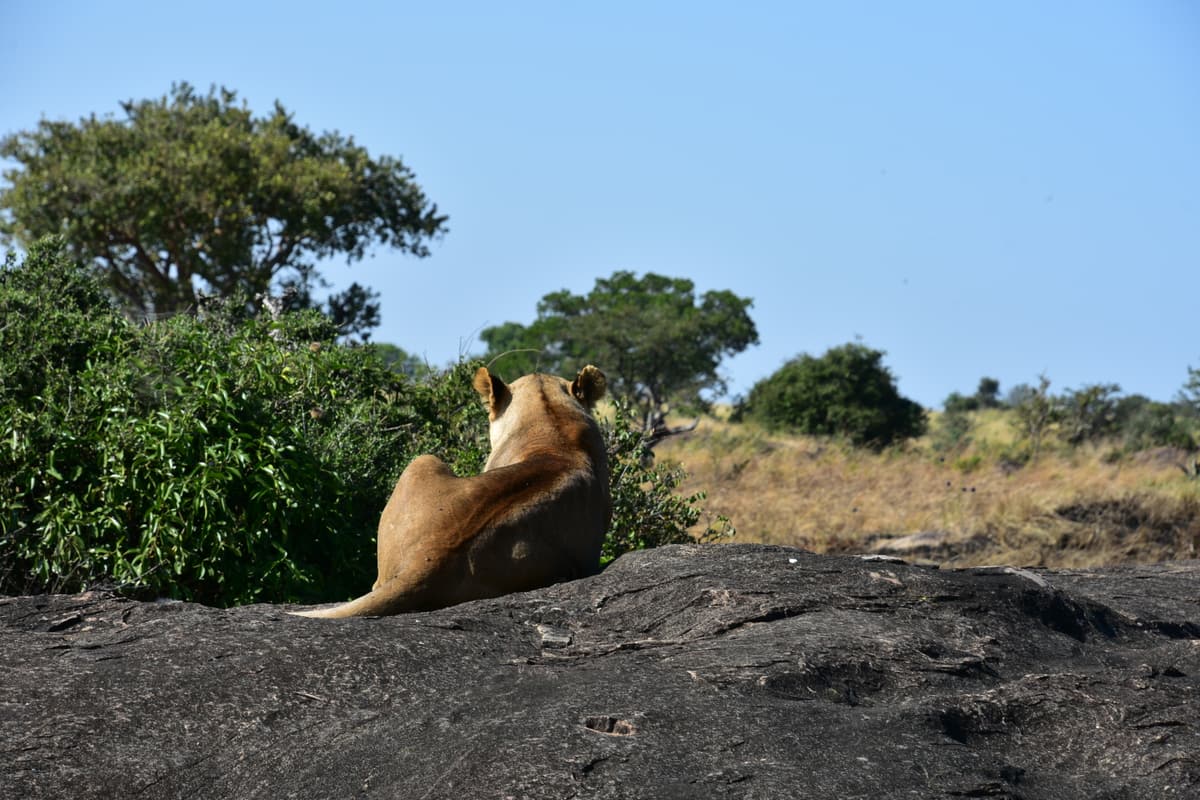
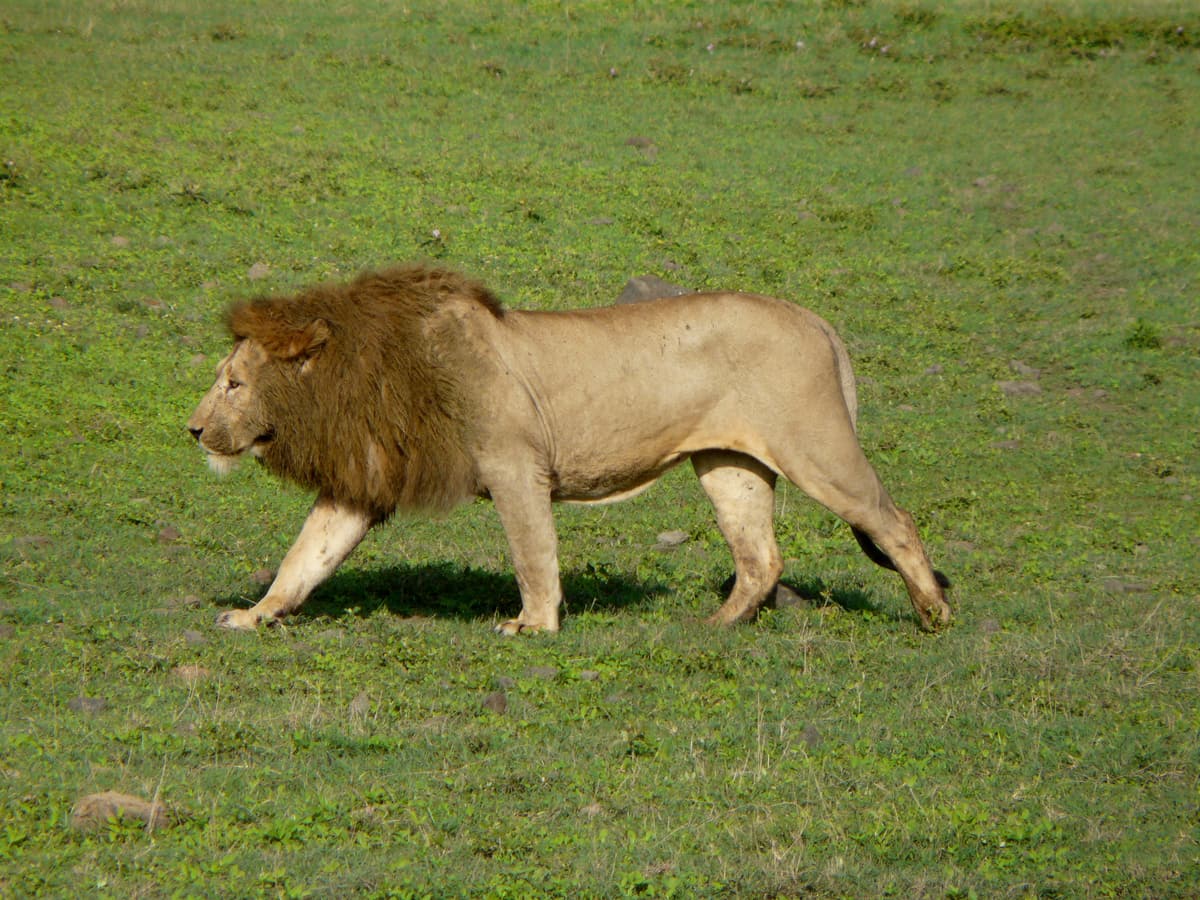
The central Seronera valley has water all year and is the most dependable area for big cats — lions on the kopjes, leopards in the sausage trees along the river, cheetahs on the open plains. It is also the busiest part of the park.
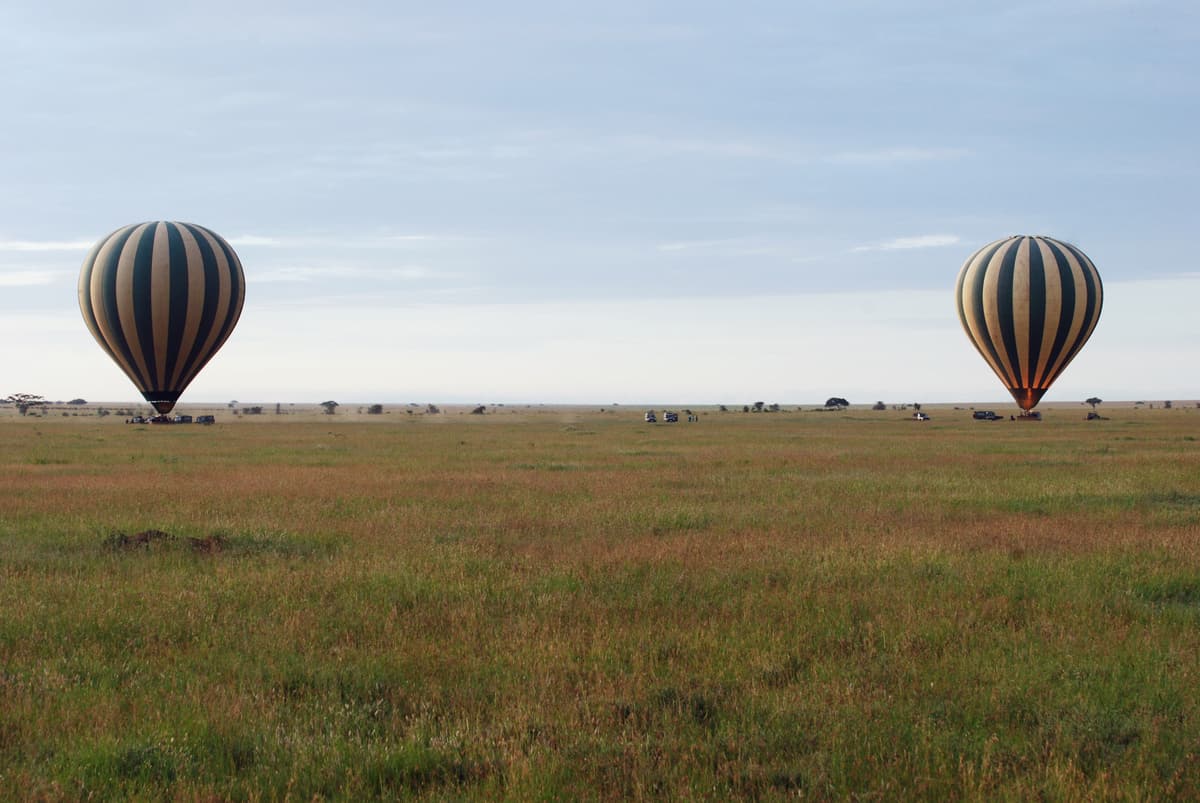
Float over the plains in a balloon
Hot-air balloons take off at dawn from several sites in the park and end with a bush breakfast. It is expensive, and it has to be booked ahead for a morning when you are already sleeping in the Serengeti.
See the kopjes
The rounded granite outcrops that rise from the plains — the kopjes — are favourite lookouts for lions and home to hyraxes, agama lizards and, at some sites, old Maasai rock paintings.
How to get to Serengeti National Park
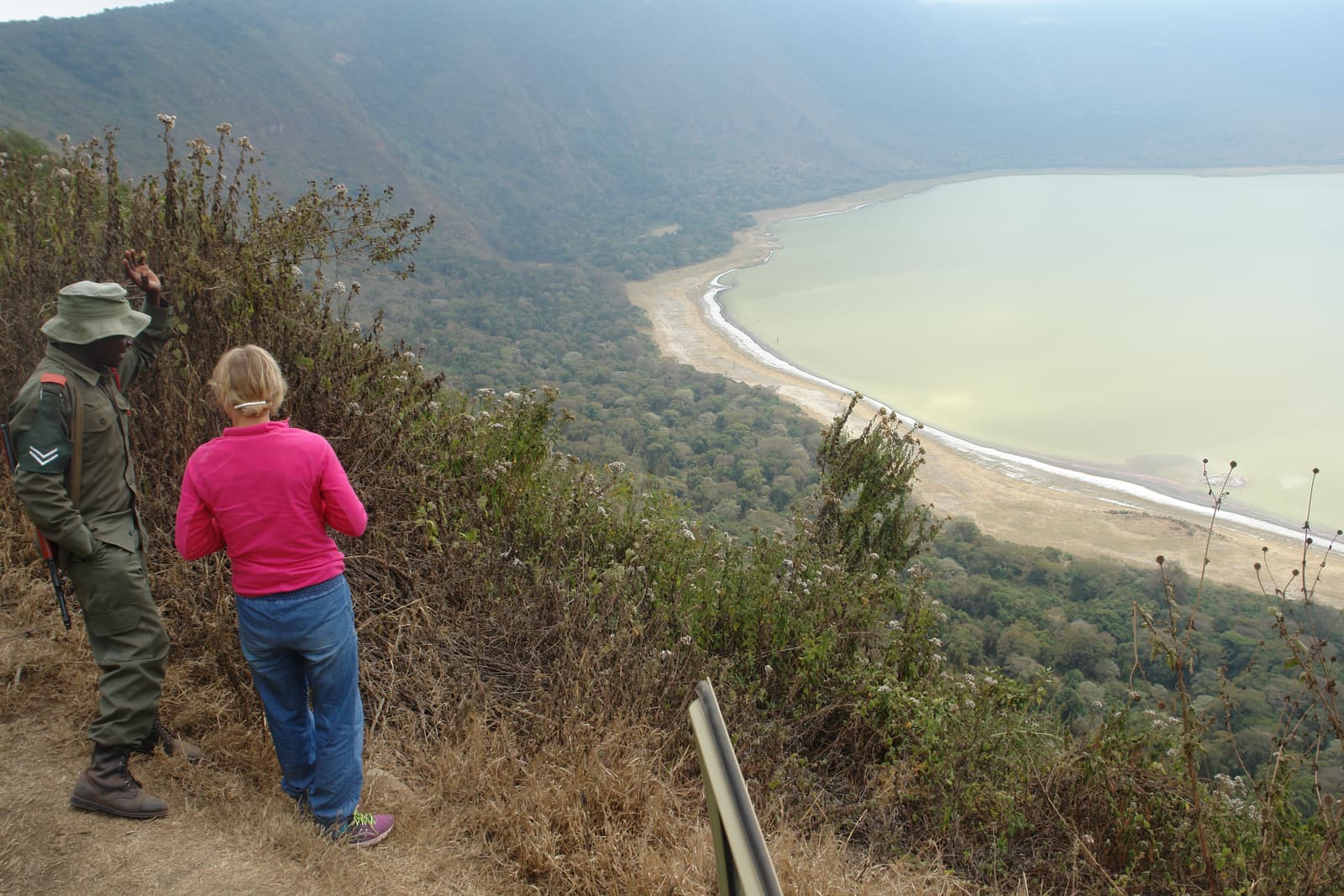
- By road the route from Arusha runs through the Ngorongoro Conservation Area: about three hours from the crater rim to Naabi Hill Gate and on to Seronera, over rough corrugated gravel.
- Light aircraft link Arusha with several Serengeti airstrips in around an hour. Many travellers drive in via the crater and fly back.
- Driving through the conservation area means paying its entry fee as well as the Serengeti’s, even if you do not go down into the crater.
Insider tips
- Give it at least two nights, ideally three. From Arusha, a single night means most of your time is spent on the road.
- Decide where to stay by where the herds are likely to be in your month, not by the lodge’s photos.
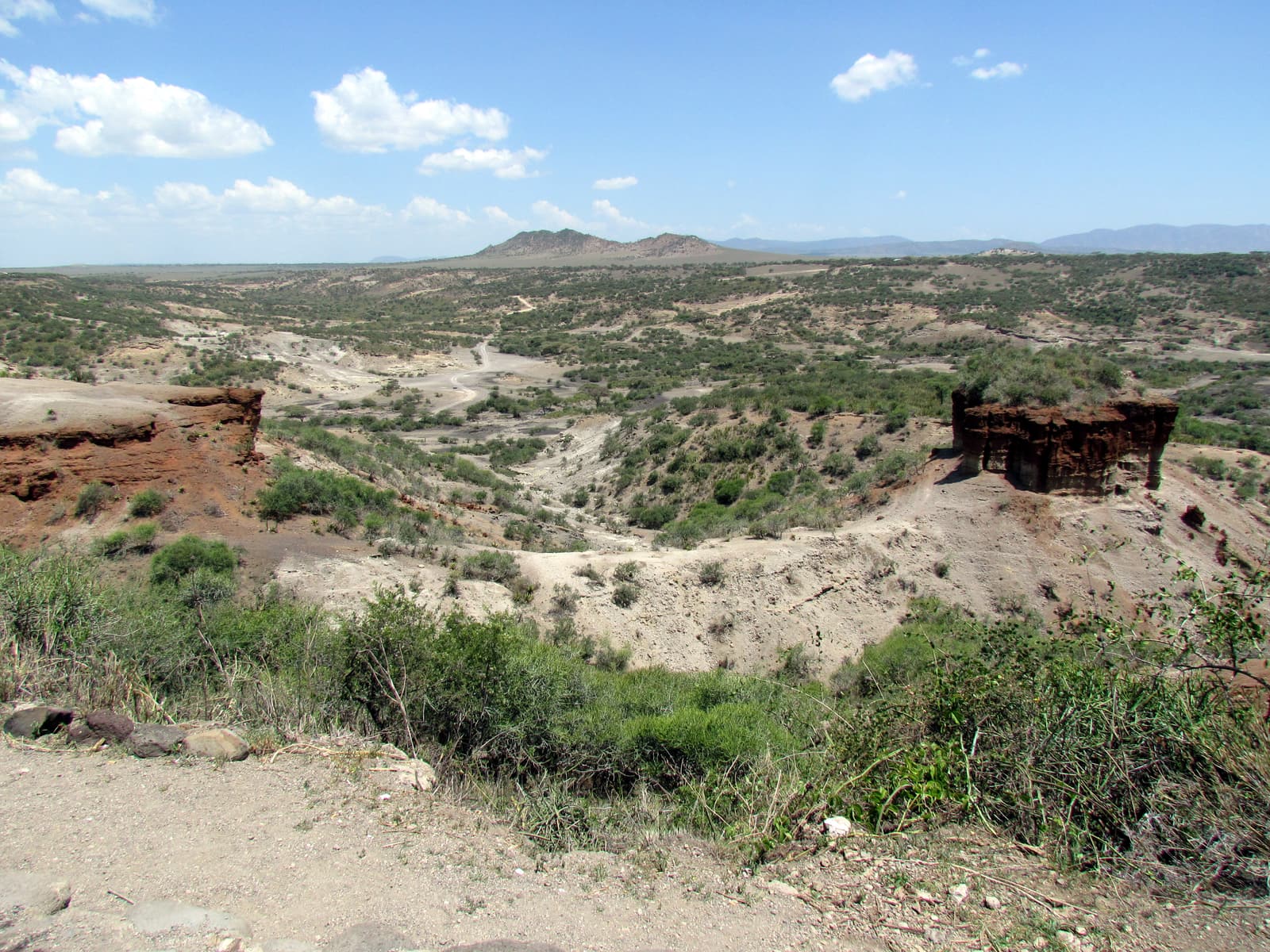
- The drive past Olduvai is long and bumpy; a neck pillow and a scarf for the dust are worth packing.
Best tours & safaris: Serengeti National Park
These experiences are the easiest way to see Serengeti National Park:
 Multi-day safari from €802
Arusha: 3-Day Serengeti & Ngorongoro Crater Big Five Safari
The classic short northern-circuit safari and the most-reviewed Ngorongoro product on GetYourGuide. You drive from Arusha across the conservation area to the Serengeti, spend the night out on the plains, and finish with a morning descent into the Ngorongoro Crater before returning to Arusha. Three days is tight for the distances involved, but it does deliver both headline parks.
- Two days in the Serengeti, one in the crater
- Game drives in a pop-up-roof 4x4
- The most-reviewed Ngorongoro safari on GetYourGuide
 Camping safari from €846
Arusha: Serengeti and Ngorongoro Multi-Day Camping Safari
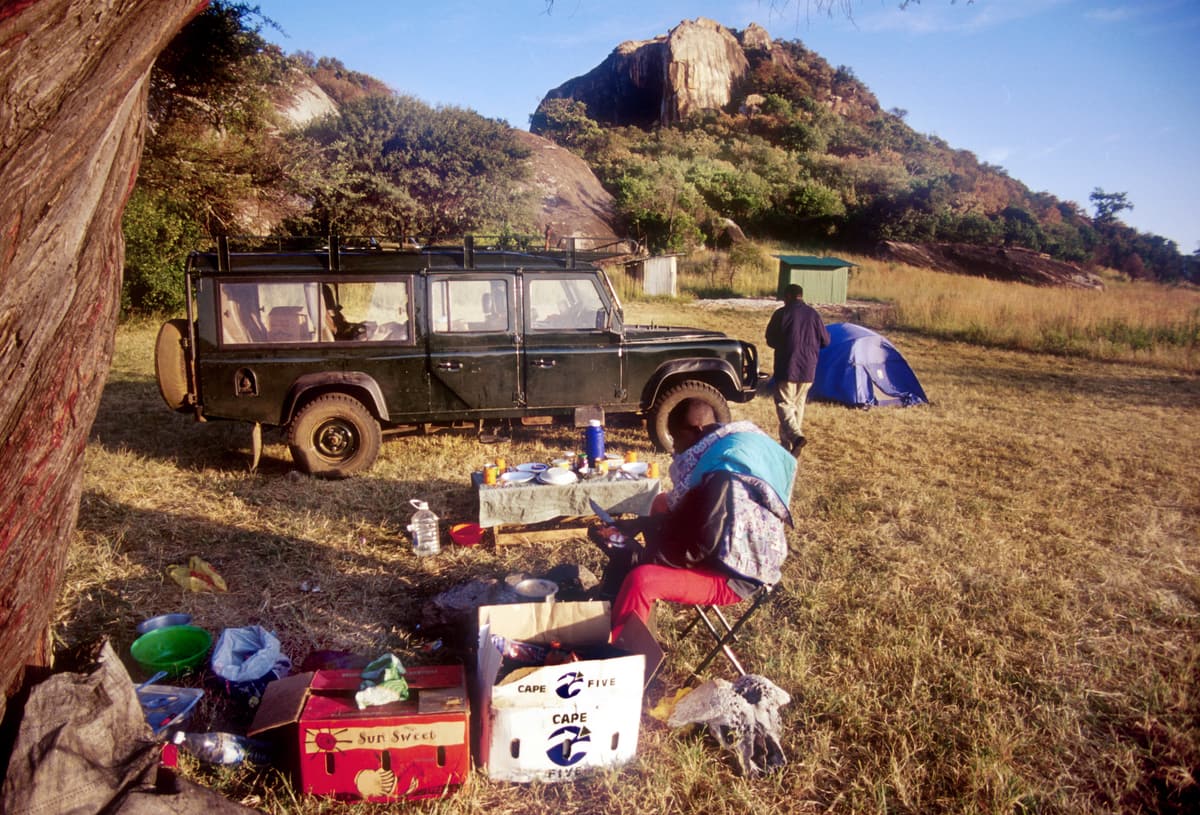
A budget camping safari from Arusha that covers the Serengeti and the Ngorongoro Crater, with tents, a cook and a driver-guide. Camping keeps the price down and puts you inside the parks at night — bring warm layers, because the public campsite on the crater rim sits at about 2,300 metres and is cold.
- Budget camping with a safari cook
- Serengeti game drives and a crater descent
- Dozens of traveller reviews
Balloon flight from €534 Serengeti National Park: Balloon Safari at Dawn
A dawn hot-air balloon flight over the Serengeti followed by a bush breakfast. It starts inside the park before sunrise, so it only works if you are already sleeping in the Serengeti — treat it as an add-on to a multi-day safari, not a stand-alone trip.
- Dawn flight over the Serengeti
- Bush breakfast after landing
- Add-on for travellers already in the park
 Multi-day safari from €802
Arusha: 3-Day Serengeti & Ngorongoro Crater with Balloon
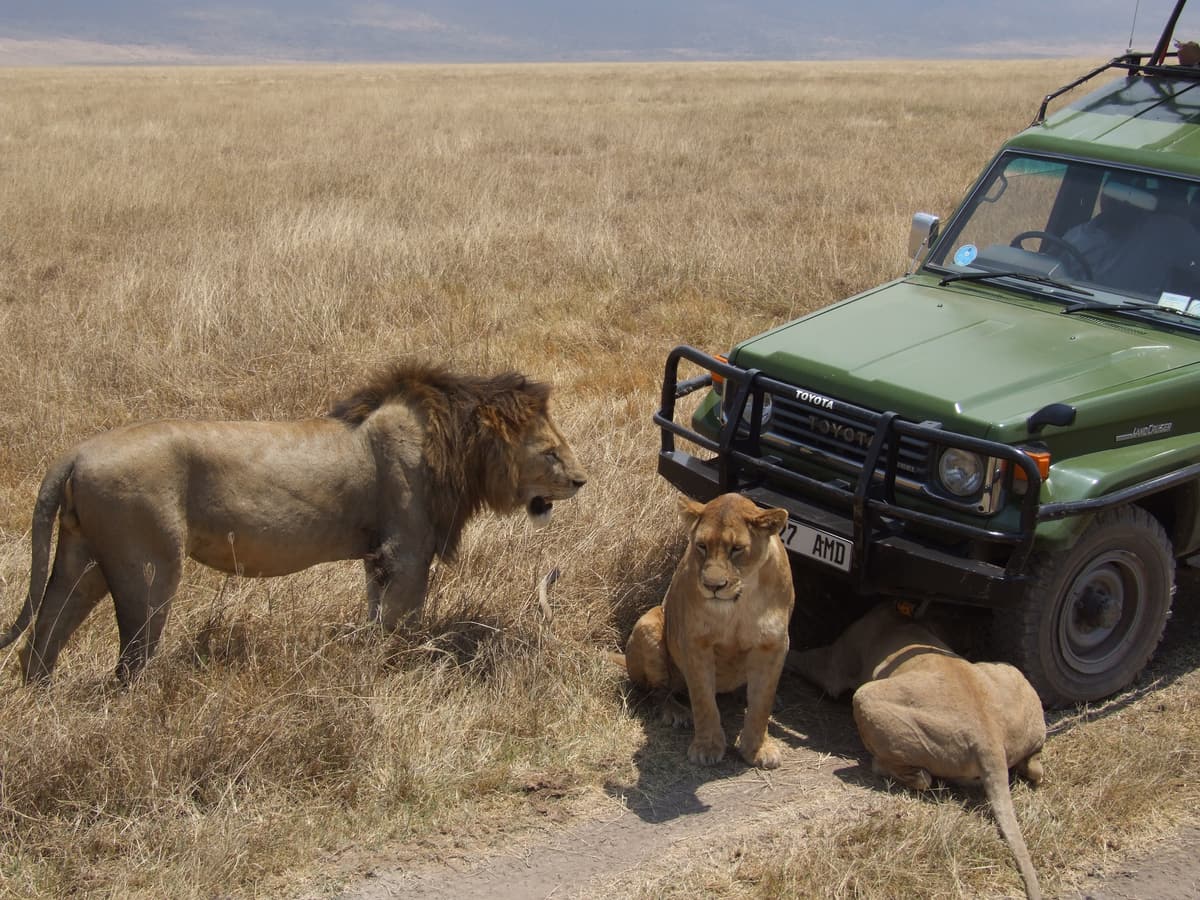
A three-day Serengeti and Ngorongoro safari built around the option of a dawn hot-air balloon flight over the Serengeti. Check whether the balloon is included in the price you are shown or sold as an add-on.
- Serengeti and crater game drives
- Hot-air balloon experience on offer
- Well reviewed