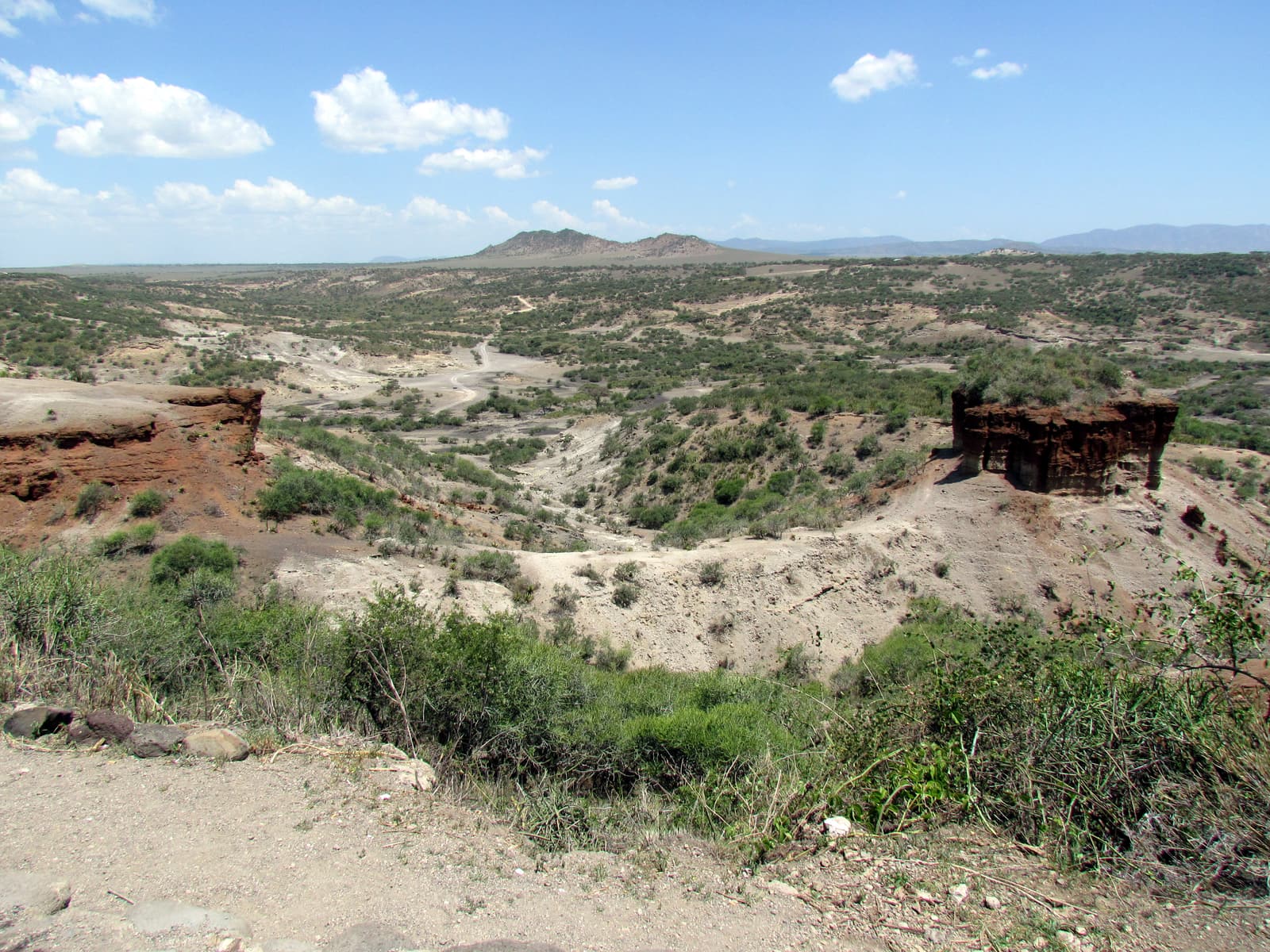
About an hour’s drive beyond the crater rim, the road to the Serengeti crosses a dry, layered ravine some 48 km long and up to 90 m deep. This is Olduvai Gorge — more correctly Oldupai, after the Maasai name for the wild sisal that grows here. Its exposed beds record close to two million years of human evolution.
Louis and Mary Leakey worked here for decades. In 1959 Mary Leakey found the skull of Paranthropus boisei (first named “Zinjanthropus”), and fossils of Homo habilis followed soon afterwards, together with some of the oldest known stone tools. The finds helped establish East Africa as central to the story of human origins.
Top things to do: Olduvai Gorge
Visit the museum and viewpoint
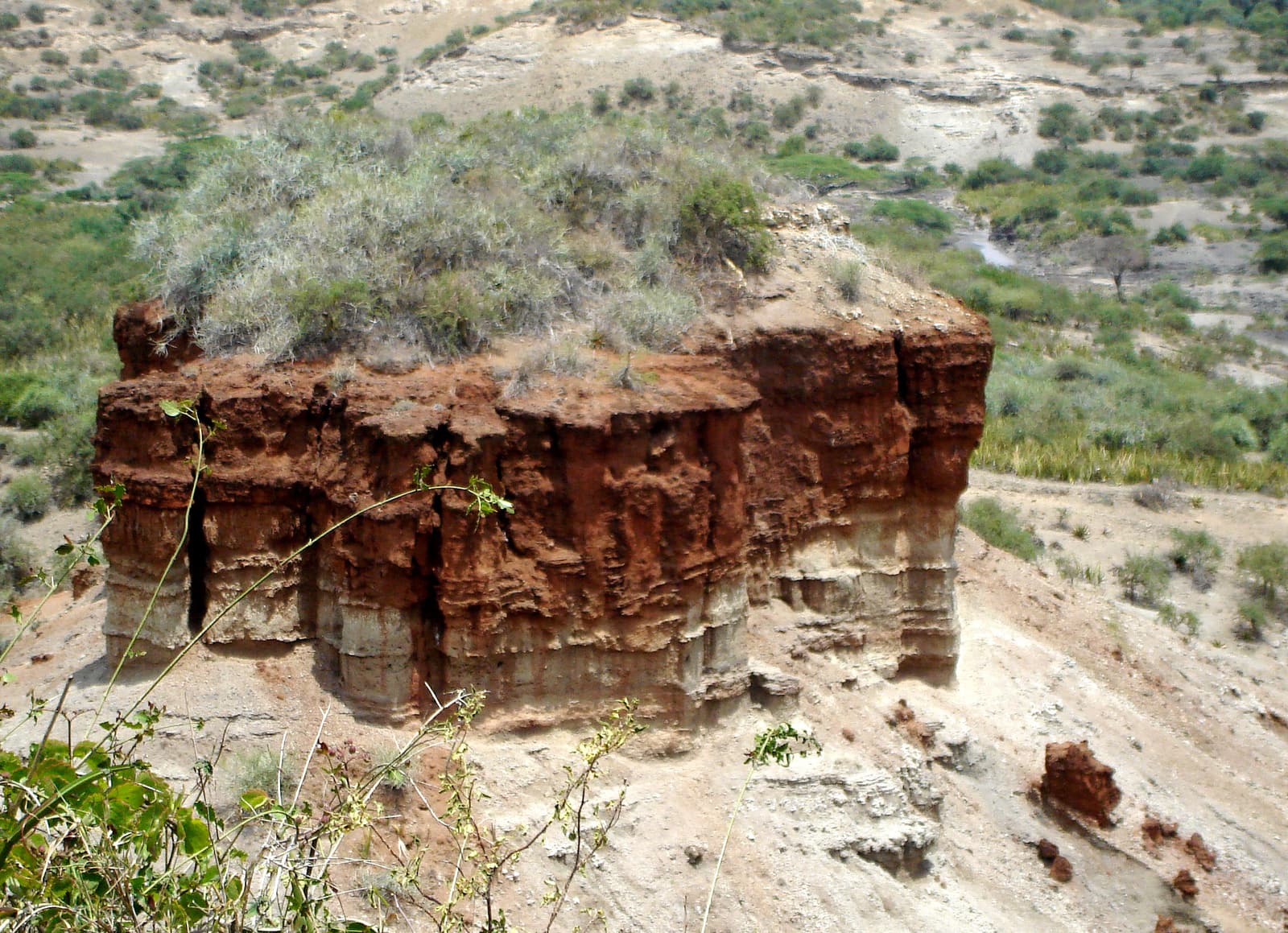
The Olduvai Gorge Museum stands on the rim of the gorge with a terrace looking over the eroded beds and the red monolith that appears in most photographs. Its galleries cover the geology, the fossils and the Leakeys’ work, and a guide usually gives a short talk at the viewpoint. Allow 45 minutes to an hour. A separate entrance fee is charged — check whether your safari includes it.
See the Laetoli footprints
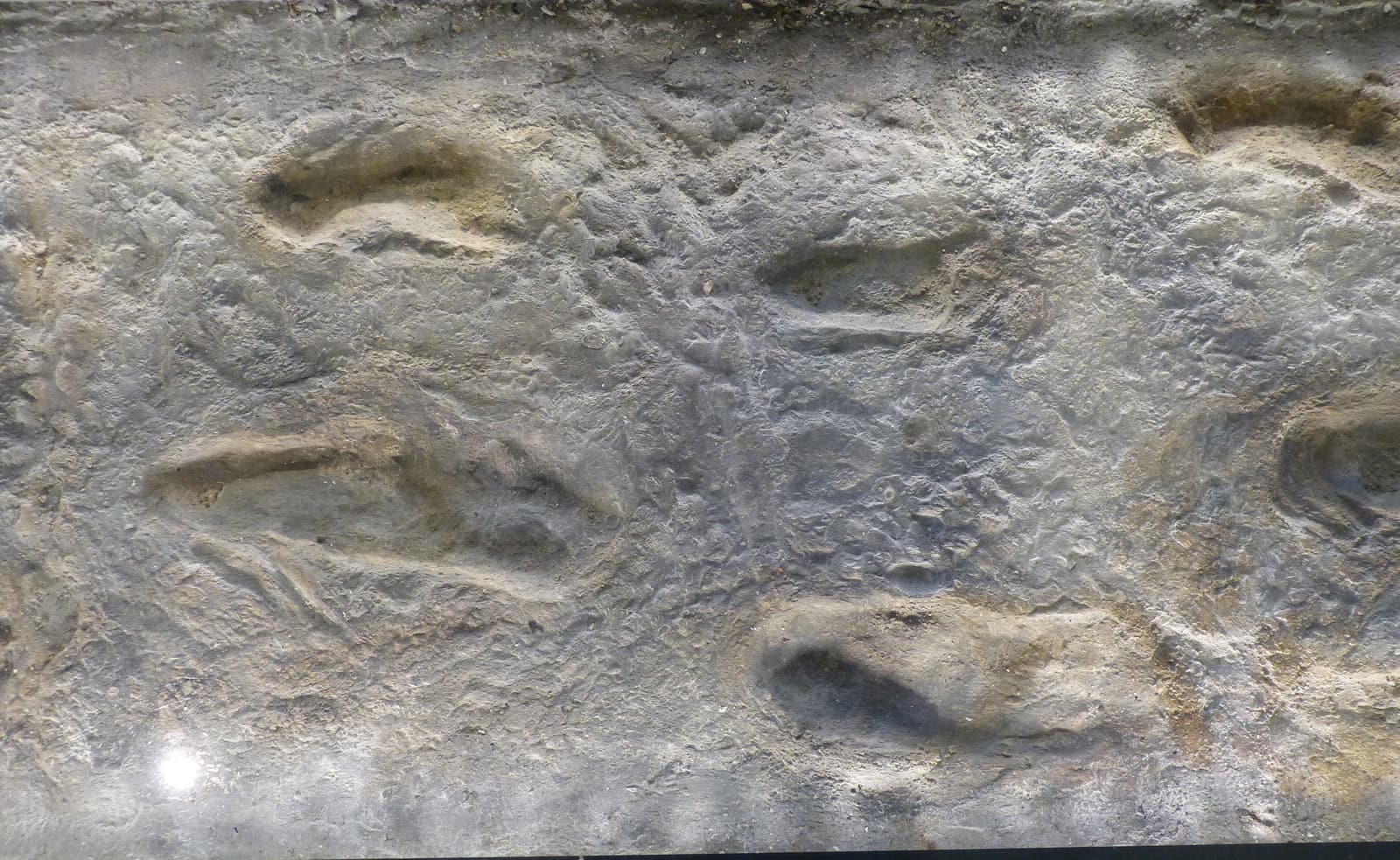
At Laetoli, roughly 45 km to the south, Mary Leakey’s team uncovered in 1978 a trail of footprints left in volcanic ash about 3.6 million years ago — among the oldest direct evidence of hominins walking upright. The original trackway has been reburied to protect it; most visitors see the cast and the explanation in the Olduvai museum.
Drive out to the Shifting Sands
North of the gorge lies a crescent-shaped dune of fine black volcanic ash, thought to come from the volcano Ol Doinyo Lengai. The wind pushes it across the plain by something like 15 to 20 metres a year, and markers show where it used to stand. It is a short detour that needs a guide who knows the track.
Go down into the gorge
With a guide from the museum it is sometimes possible to drive down into the gorge to the marker at the site of the 1959 find. Ask on arrival; it depends on time, weather and current rules.
How to get to Olduvai Gorge
- Olduvai lies a few kilometres off the main road between the Ngorongoro Crater and the Serengeti’s Naabi Hill Gate, about an hour from the crater rim.
- Nearly everyone visits as a stop on a multi-day safari on the way to or from the Serengeti. It is too far for a crater day trip from Arusha.
- The road is rough, corrugated gravel — dusty in the dry season and slow after rain.
Insider tips
- The stop fits best on the outward drive to the Serengeti, around midday, when the animals are resting anyway.
- The plains are hot, bright and exposed: bring a hat and water.
- If human origins matter to you, tell your operator in advance so the stop is not cut short.
Best tours & safaris: Olduvai Gorge
These experiences are the easiest way to see Olduvai Gorge:
 Multi-day safari from €802
Arusha: 3-Day Serengeti & Ngorongoro Crater Big Five Safari
The classic short northern-circuit safari and the most-reviewed Ngorongoro product on GetYourGuide. You drive from Arusha across the conservation area to the Serengeti, spend the night out on the plains, and finish with a morning descent into the Ngorongoro Crater before returning to Arusha. Three days is tight for the distances involved, but it does deliver both headline parks.
- Two days in the Serengeti, one in the crater
- Game drives in a pop-up-roof 4x4
- The most-reviewed Ngorongoro safari on GetYourGuide
 Camping safari from €846
Arusha: Serengeti and Ngorongoro Multi-Day Camping Safari
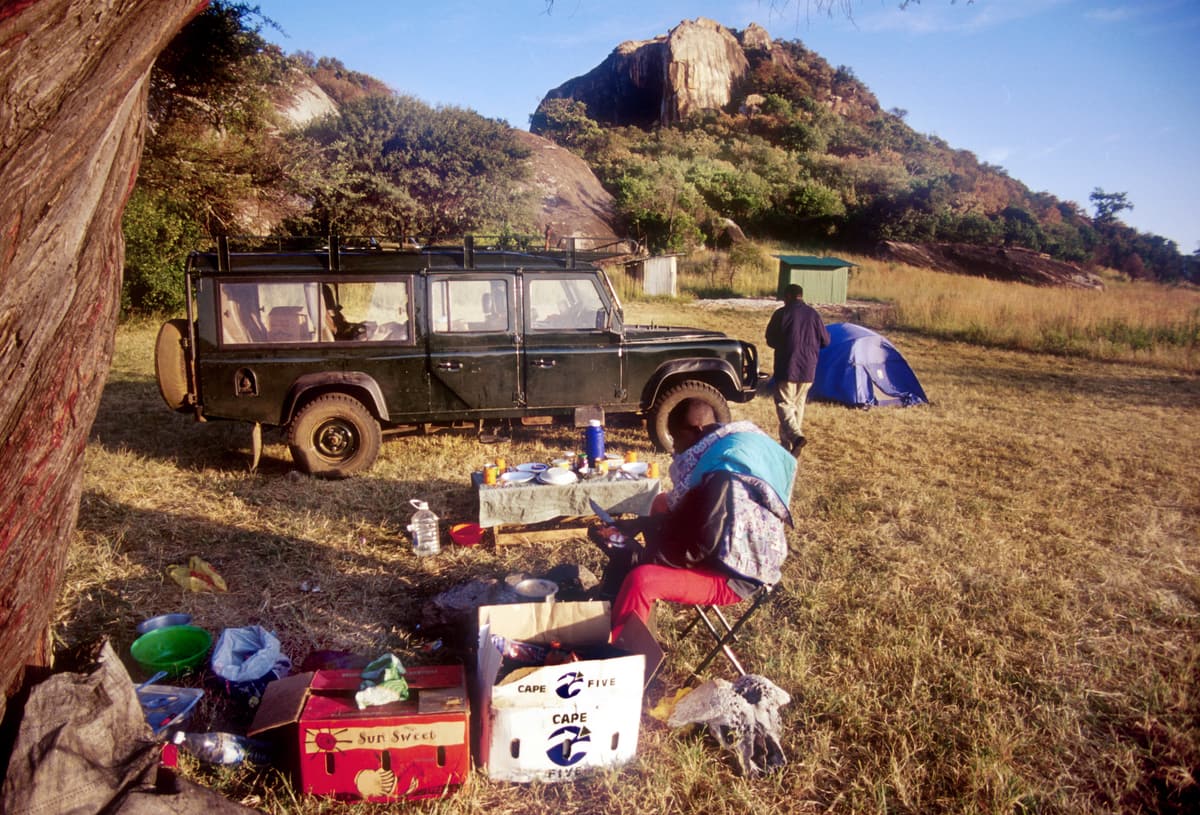
A budget camping safari from Arusha that covers the Serengeti and the Ngorongoro Crater, with tents, a cook and a driver-guide. Camping keeps the price down and puts you inside the parks at night — bring warm layers, because the public campsite on the crater rim sits at about 2,300 metres and is cold.
- Budget camping with a safari cook
- Serengeti game drives and a crater descent
- Dozens of traveller reviews
 Multi-day safari from €535
Arusha: 4-Day Tarangire, Serengeti & Ngorongoro Safari
A flexible northern-circuit loop that can run from two to four days: Tarangire first, then the Serengeti, then the Ngorongoro Crater on the way back to Arusha. The four-day version gives the Serengeti the time it needs and is a sensible minimum for a first safari.
- Three parks in one loop
- Flexible length from two to four days
- Well reviewed for its price
 Multi-day safari from €1782
Tanzania: 7-Day Safari with Lodges & Game Drives
A week-long lodge safari on the northern circuit, with time for several nights in the Serengeti as well as the crater. Seven days is the length at which a northern-circuit trip stops feeling rushed. A newer listing — check recent reviews before booking.
- A full week on the northern circuit
- Lodge accommodation
- New listing — few reviews yet