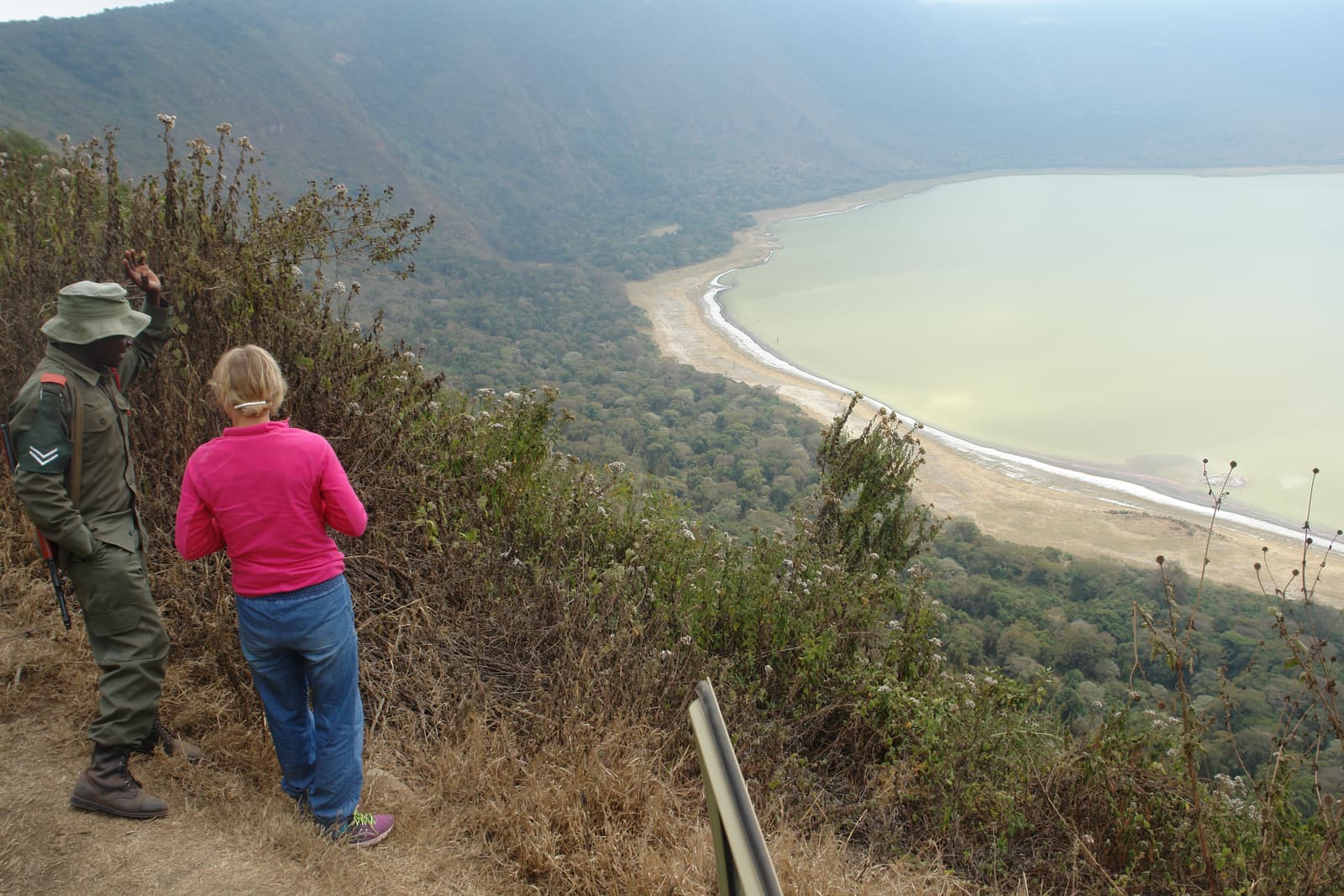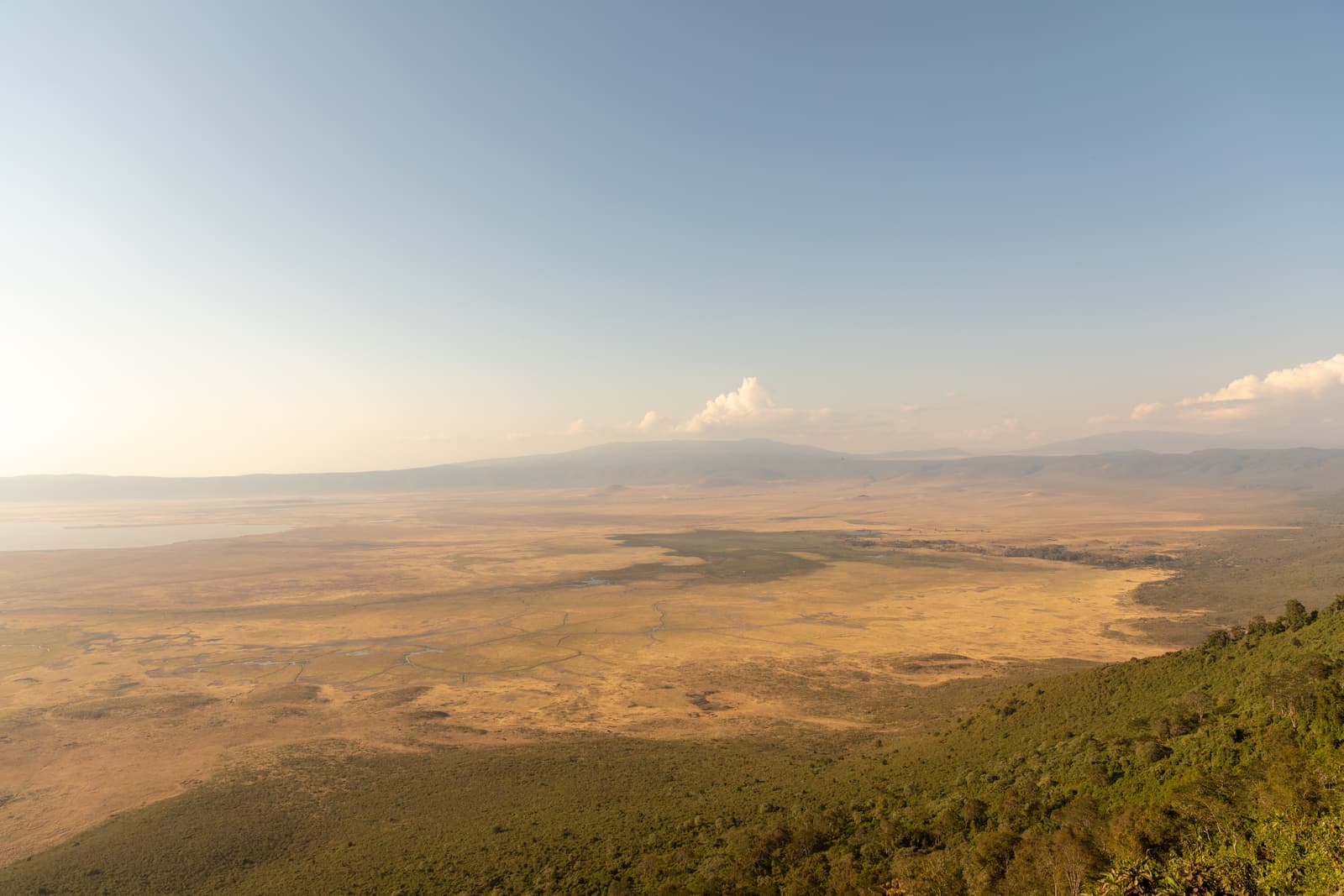
Two to three million years ago a volcano that may have rivalled Kilimanjaro in height emptied its magma chamber and collapsed in on itself. What remained is the Ngorongoro Crater: the largest intact, unflooded volcanic caldera on earth, roughly 19 km across, with a floor of about 260 square kilometres lying some 600 metres below a forested rim. It is the centrepiece of the Ngorongoro Conservation Area, a UNESCO World Heritage Site since 1979.
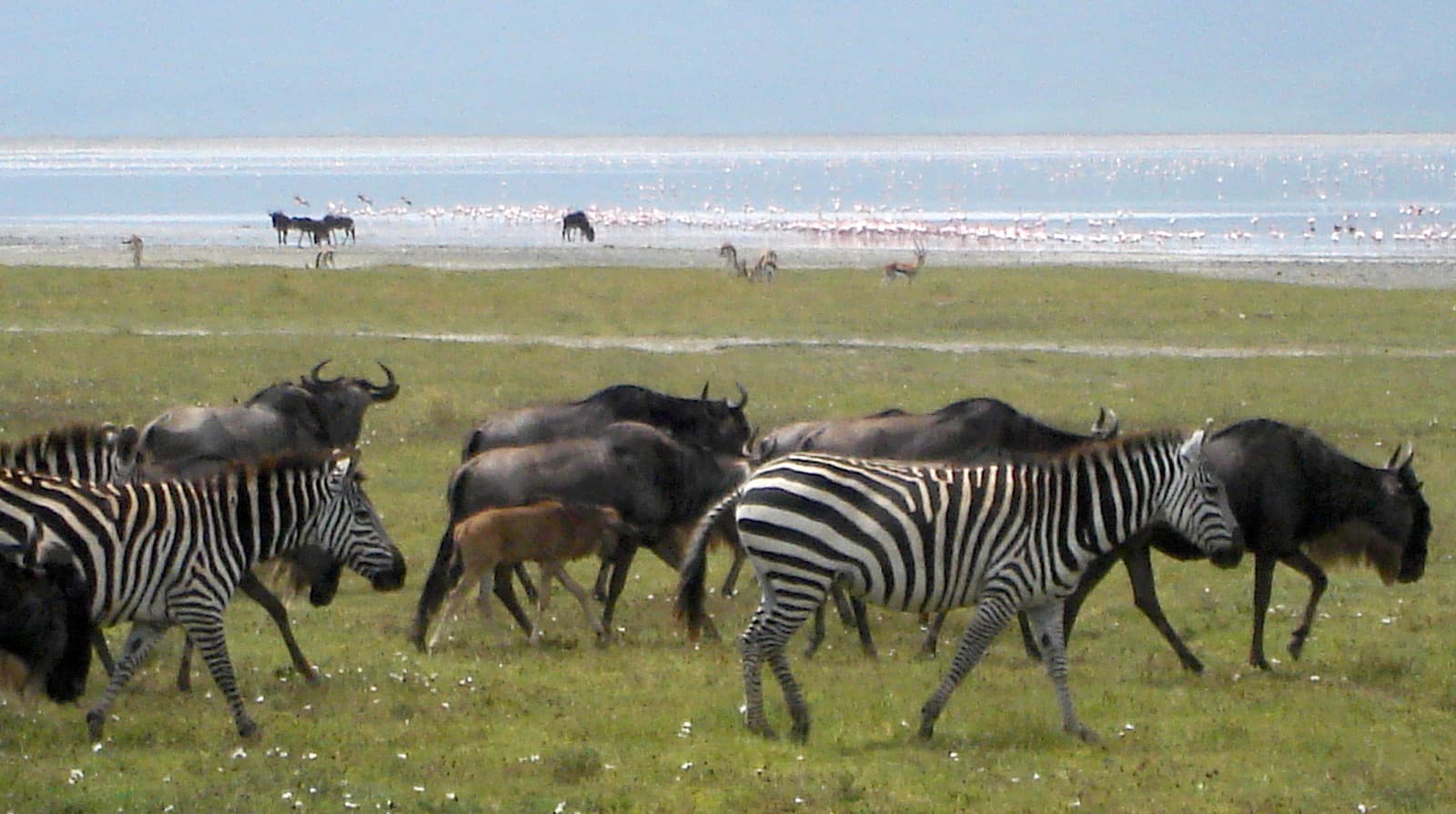
The floor works like a natural enclosure, although the animals are free to climb out. Permanent springs and swamps keep around 25,000 large mammals here all year, so game viewing does not depend on the season the way it does in the Serengeti. In a single morning you can reasonably hope for lion, elephant, buffalo, hippo, hyena and — with luck and binoculars — one of the crater’s black rhinos.
Top things to do: Ngorongoro Crater
Do the crater game drive
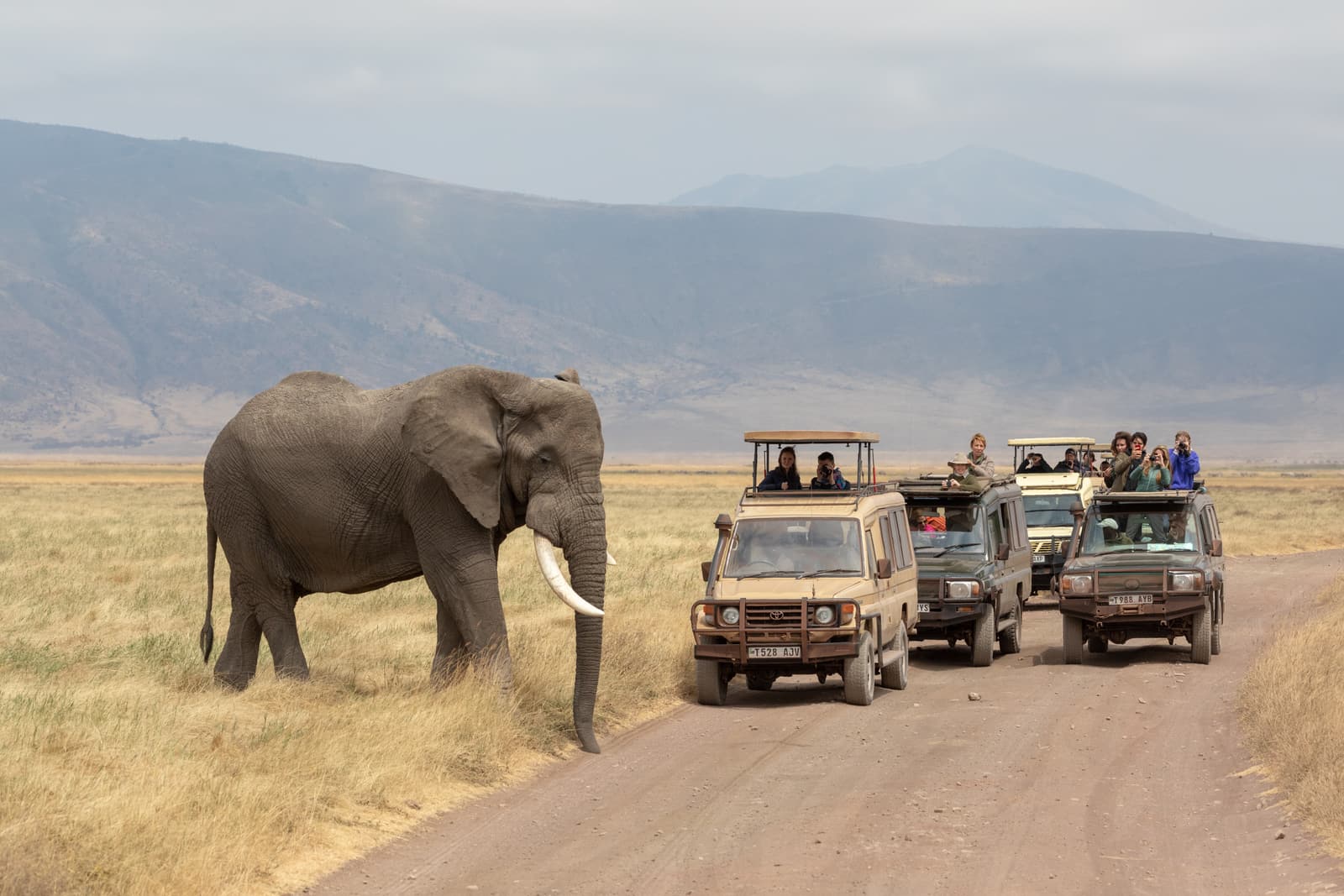
Everything here revolves around one activity: a game drive on the crater floor in a 4x4 with a pop-up roof. Vehicles go down the steep one-way Seneto descent road on the western side and climb out by the Lerai ascent road to the south; a third road on the eastern rim near Lemala carries traffic both ways. Time on the floor is limited to about six hours per permit, which is why operators talk about a “half-day” in the crater. Compare crater day trips and safaris.
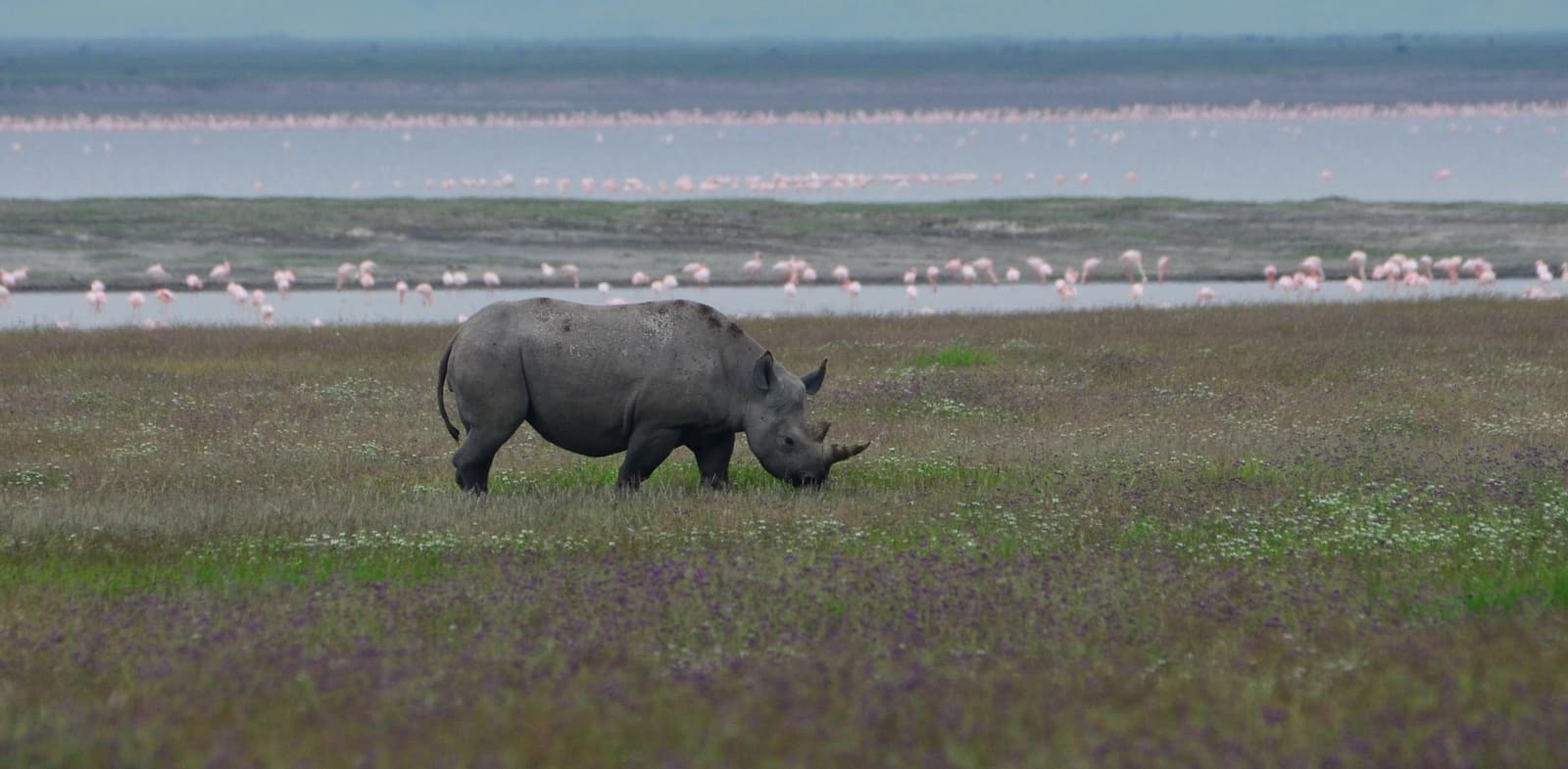
Look for black rhino
The crater is one of the few places in Tanzania where seeing a wild black rhino is realistic. The population is small — a few dozen animals, guarded around the clock — and they are usually spotted at a distance on the open grassland, most often early in the morning. Vehicles must stay on the tracks, so bring binoculars or a long lens and do not expect a close-up.
Lake Magadi and the flamingos
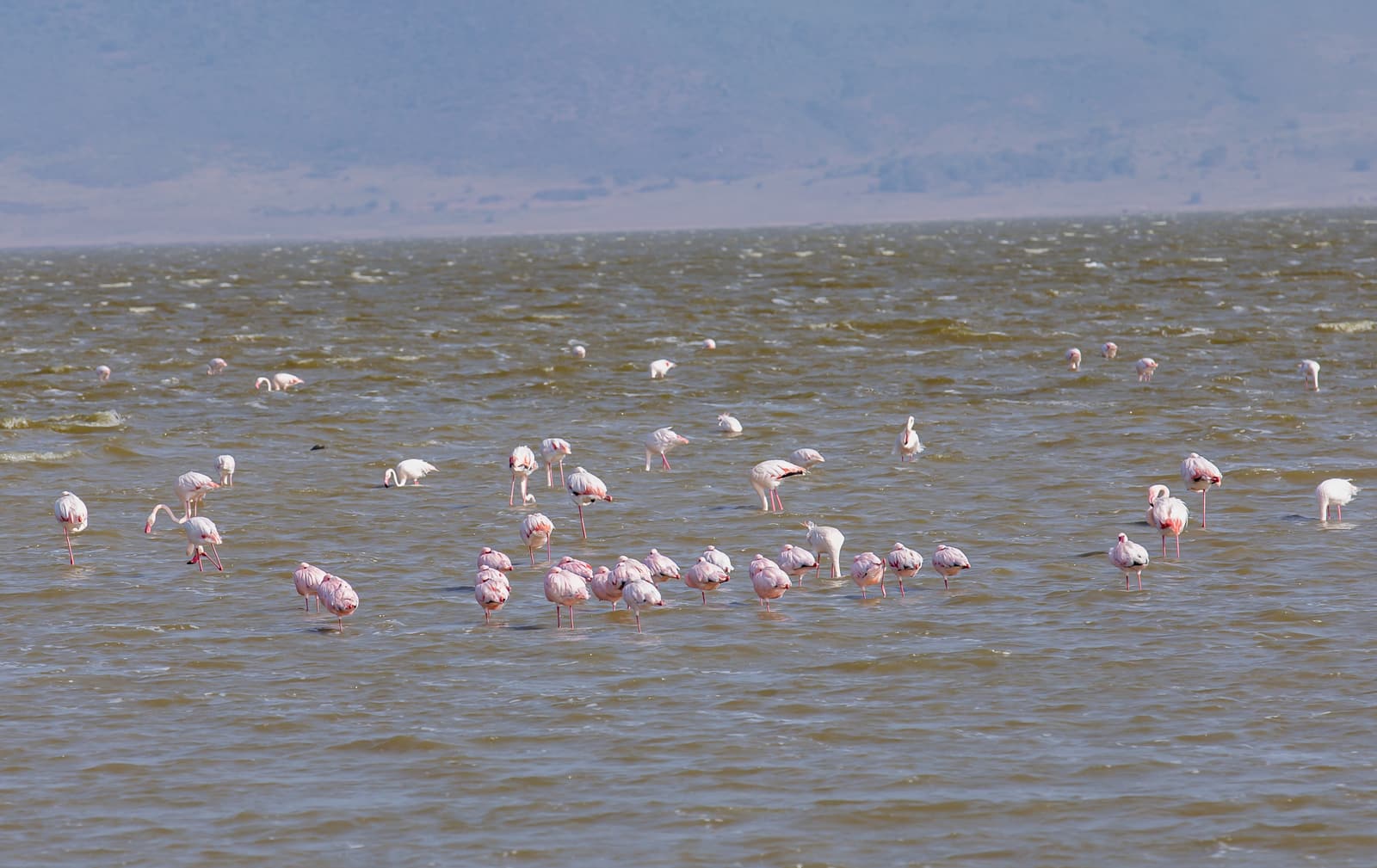
The shallow soda lake in the middle of the floor, Lake Magadi (also called Lake Makat), turns pink at the edges when lesser and greater flamingos come to feed. Numbers rise and fall with the water level and the algae, so treat them as a bonus. Hyenas and jackals patrol the shoreline, and the flat ground around the lake is good lion country.
Lerai Forest
A grove of tall yellow-barked fever trees at the foot of the southern wall. This is where you are most likely to meet the crater’s elephants — mostly old bulls with heavy tusks — along with vervet monkeys, baboons, waterbuck and bushbuck. Leopards live here and on the rim, but they are seldom seen.
Picnic at the hippo pool
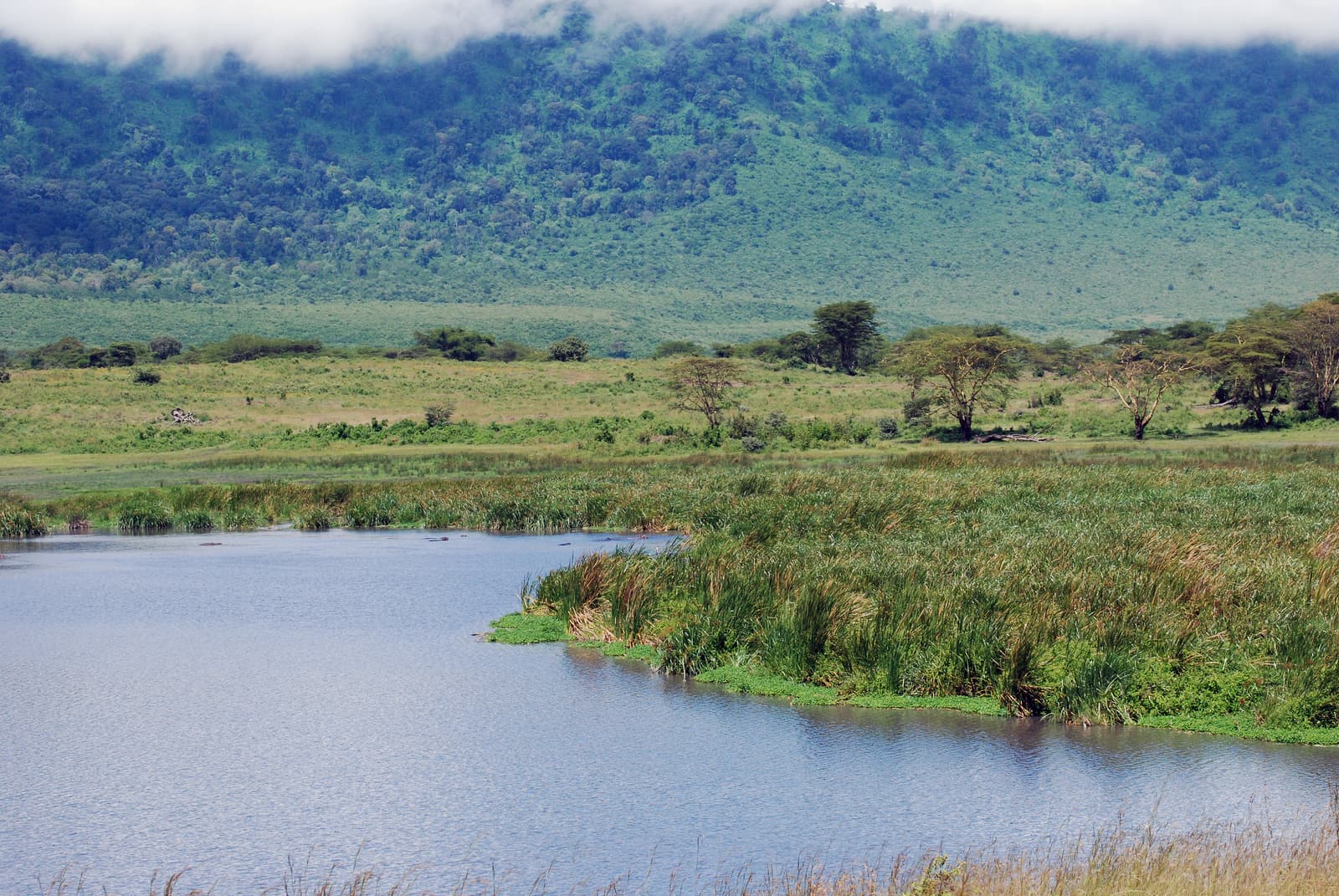
Leaving the vehicle is only allowed at the designated picnic sites. The best known is Ngoitokitok Springs, a pool full of hippos with toilets and room to stretch your legs; there is another site at Lerai Forest. Eat inside the car or keep a firm grip on your lunch — the black kites here are expert thieves.
Stop at the rim viewpoint
Just after the road from the gate reaches the top, a signposted viewpoint gives the first full view of the crater. In the early morning the bowl is often filled with cloud that spills over the rim; by mid-morning it usually clears. A monument nearby commemorates Michael Grzimek, who died in 1959 while filming and researching here, and his father Bernhard.
How to get to Ngorongoro Crater
- From Arusha: about 3 to 4 hours by road — tarmac as far as Lodoare Gate, then gravel up to the rim and down into the crater. See getting there.
- From Karatu: around 20 to 30 minutes to the gate and roughly an hour in total to the start of the descent road.
- By air: scheduled light aircraft fly from Arusha to Lake Manyara airstrip, about an hour and a half’s drive from the gate.
- Opening hours: the conservation-area gates and crater roads work to daylight hours — roughly 6 am to 6 pm, with last descents in mid-afternoon. Your guide will know the current cut-off times.
Insider tips
- Be at the descent road when it opens. The first two hours have the best light, the most active predators and the fewest vehicles.
- Dress in layers: the rim, at about 2,300 m, can be only a few degrees above freezing at dawn, while the floor is warm by late morning.
- There are no giraffes on the crater floor and no impala either. It is not a fault of your guide — the steep walls and the vegetation do not suit them.
- Ask what your price includes. The conservation-area entry fee is charged per person and the crater service fee per vehicle; see fees explained.
- Walking on the crater floor is not allowed. For a walk, add Empakaai or Olmoti or a guided rim walk with a ranger.
Best tours & safaris: Ngorongoro Crater
These experiences are the easiest way to see Ngorongoro Crater:
 Day trip from €258
Arusha: Ngorongoro Crater Day Trip with Game Drive
The crater in a single long day from Arusha: an early start, around three to four hours on the road each way, and a game drive on the crater floor with a picnic lunch. It is the simplest way to see Ngorongoro if you have no time for an overnight — expect to be back in Arusha in the evening.
- Early pickup from your Arusha hotel
- Game drive on the crater floor
- Picnic lunch inside the crater
 Day trip from €259
Ngorongoro Crater: Full-Day Safari Tour
A full-day crater safari with a choice of pickup points — Arusha, Mto wa Mbu or Karatu. Starting from Karatu or Mto wa Mbu cuts hours of driving off the day and gets you to the descent road much earlier, which is when the crater is at its best.
- Pickup options in Arusha, Mto wa Mbu or Karatu
- Full crater-floor game drive
- Good fit if you already sleep near the gate
Day trip from €330 Arusha: Ngorongoro Crater Full-Day Safari
Another well-reviewed full-day crater safari from Arusha, with hotel pickup, a game drive on the crater floor and lunch. Compare the inclusions carefully against the other day trips — especially whether the conservation-area entry and crater service fees are in the price.
- Hotel pickup in Arusha
- Crater-floor game drive with lunch
- A chance of black rhino
 Multi-day safari from €330
Arusha: 2-Day Tarangire & Ngorongoro Crater Big Five Safari
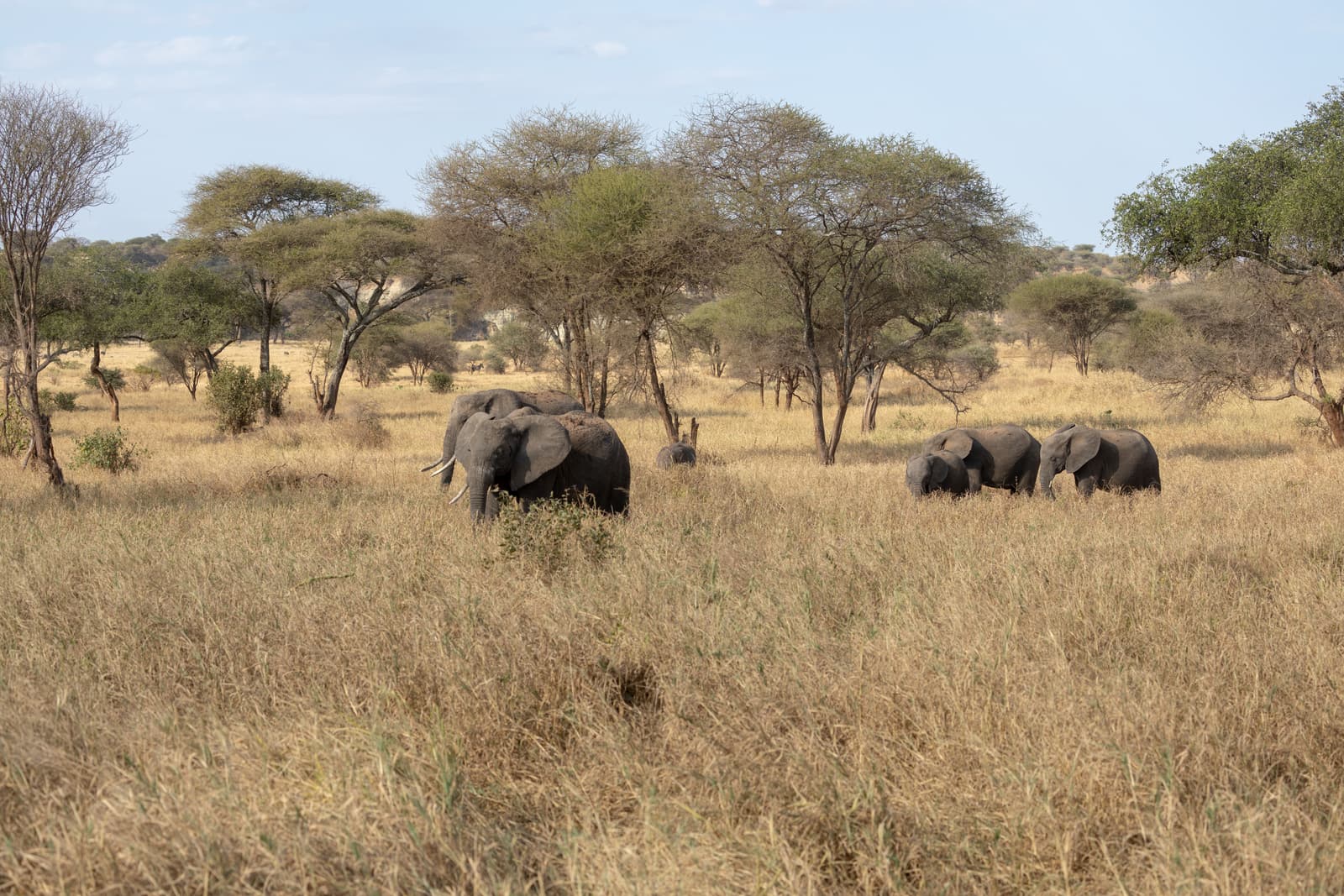
Two parks, one night. Day one is Tarangire National Park, famous for elephants and baobabs; you sleep in the Karatu area and descend into the Ngorongoro Crater early on day two. The overnight near the gate turns the crater from a rushed day trip into a relaxed morning game drive.
- Tarangire’s elephants on day one
- Overnight near Karatu, early crater descent
- Often the best-value way to see the crater