You reach the Ngorongoro Crater in three stages: fly to northern Tanzania, travel from Arusha to the conservation-area gate near Karatu, then climb to the rim and descend 600 metres to the floor. The whole road journey from Arusha takes about three to four hours each way.
Step 1: flying to northern Tanzania
Kilimanjaro International Airport (JRO) lies between Arusha and Moshi, about 50 km — roughly an hour — from Arusha. It has direct or one-stop flights from Europe, the Gulf, Addis Ababa and Nairobi, among others. If your safari package does not include a pickup, a pre-booked airport transfer is the easy option.
Other routes: fly into Nairobi and take a shuttle bus or a short flight to Arusha or JRO; or fly into Dar es Salaam or Zanzibar and connect on a domestic flight. Arusha Airport (ARK), on the edge of town, handles only domestic light aircraft.
Step 2: Arusha to the gate
From Arusha a good tarmac road runs west across the Maasai plains, passes the turning for Tarangire, drops to Mto wa Mbu and Lake Manyara, and climbs the Rift Valley escarpment to Karatu. A few kilometres further is Lodoare Gate, the main entrance to the Ngorongoro Conservation Area, where permits are checked and fees are paid — electronically; cash is not accepted at the gate.
Step 3: gate to crater floor
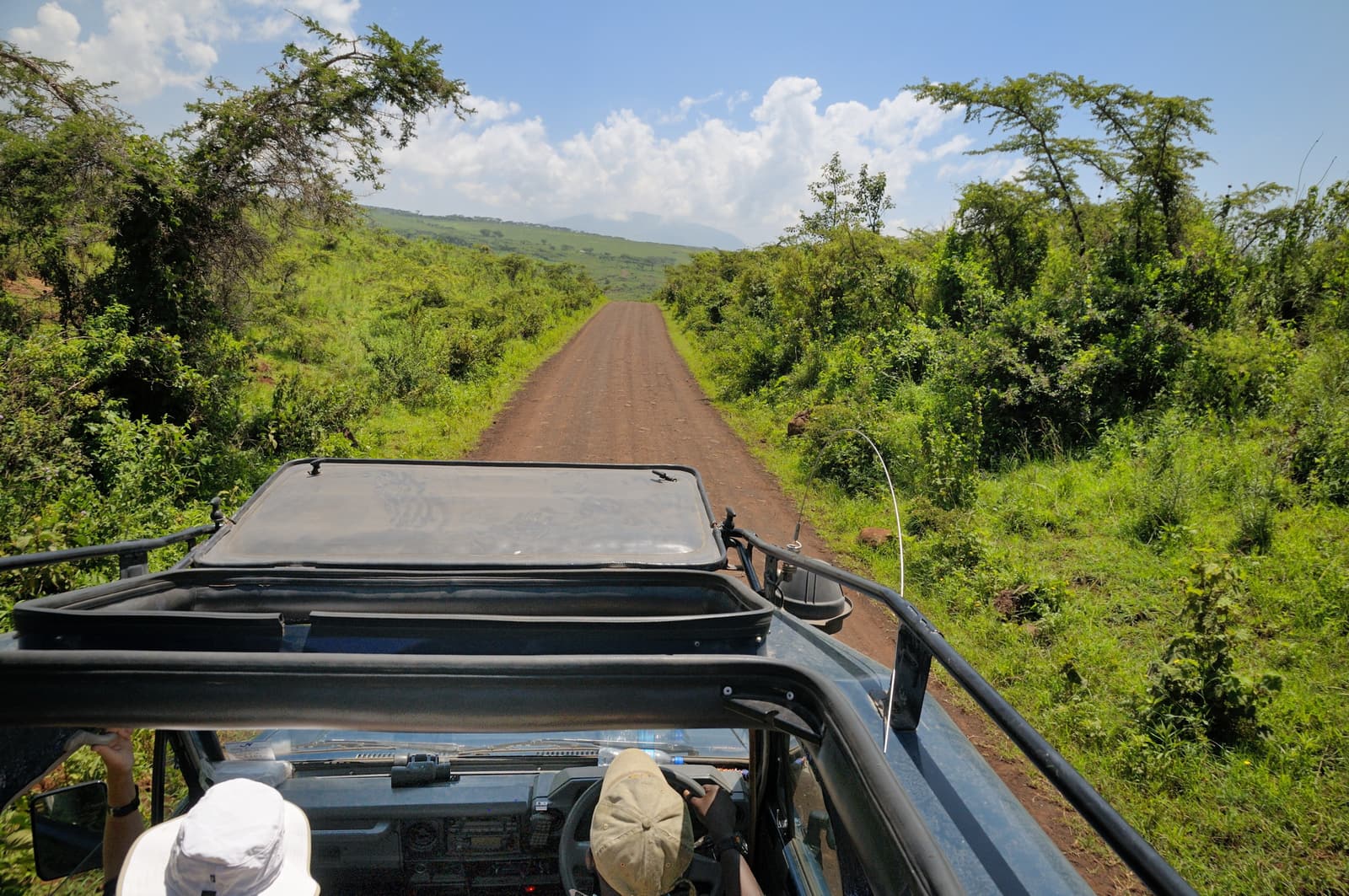
Beyond the gate the road turns to gravel and winds up through dense montane forest to the rim at about 2,300 metres, where a viewpoint gives the first look into the crater. Vehicles then follow the rim road west to the Seneto descent road, a steep one-way track down to the floor. The way out is the Lerai ascent road on the southern side; a third, two-way road serves the lodges on the eastern rim.
Journey times at a glance
| Route | Distance | Typical time | Notes |
|---|---|---|---|
| Kilimanjaro Airport (JRO) → Arusha | about 50 km | 1–1.5 hours | Tarmac; traffic near town |
| Arusha → Lodoare Gate | about 160 km | 2.5–3 hours | Tarmac all the way |
| Arusha → crater floor | about 190 km | 3.5–4 hours | Includes gate formalities and the descent |
| Karatu → crater floor | about 40 km | around 1 hour | Why most safaris overnight in Karatu |
| Lake Manyara airstrip → Lodoare Gate | about 30 km | 45–60 minutes | Flights from Arusha take around 20–25 minutes |
| Crater rim → Serengeti (Naabi Hill Gate) | about 80 km | around 2 hours | Rough gravel; passes the Olduvai turning |
Times are typical for a safari vehicle in dry conditions; rain, roadworks and queues at the gate can add to them.
Fly-in or drive?
Driving is how the great majority of visitors arrive. The road is good as far as the gate, the scenery changes constantly, and you need the vehicle for game drives anyway. Flying makes sense on higher-budget trips or when time is short: scheduled light aircraft link Arusha, Lake Manyara, Ndutu and the Serengeti airstrips, and a common plan is to drive out through the parks and fly back from the Serengeti. Baggage on these flights is usually limited to around 15 kg in soft bags — check with the airline.
There is a small airstrip on the crater rim, but it is frequently closed by cloud and has few scheduled services; Lake Manyara is the practical airstrip for Ngorongoro.
Day trip from Arusha or overnight?
- Day trip from Arusha: leave around 5 or 6 am, reach the floor by mid-morning, drive out in the early afternoon and be back in town in the evening. It works, but you spend six to eight hours on the road and arrive after the best early light.
- Overnight in Karatu: about an hour from the descent road. You can be on the floor soon after the gates open at around 6 am. This is the best balance of cost and experience.
- Overnight on the rim: the earliest start of all and the famous view, at a much higher price. See where to stay.
Can you drive yourself?
Self-drive is permitted in a suitable 4x4, and a few experienced travellers do it. In practice almost everyone uses a driver-guide: the fee and permit system is easier through a licensed operator, the tracks on the floor are unsigned, and a guide finds far more wildlife. The authorities may also require a guide to accompany private vehicles into the crater — check the current rule before planning a self-drive.
Getting around without a tour
Buses and shared minibuses run between Arusha and Karatu for a few dollars, and budget travellers sometimes arrange a seat in a shared crater vehicle from Karatu. It takes patience and flexibility, and outside the high season there may be nobody to share with.